Bridging microscopic electrode manufacturing tolerances to macroscopic battery pack performance. Evaluate how material variations propagate across 2,000+ virtual cells and govern dynamic current maldistribution in parallel connected battery modules.
In lithium-ion battery gigafactories, microscopic tolerances in manufacturing are physically unavoidable: slurry coating thickness tolerances, calendar roll porosity variations, particle diameter sizing distributions, and binder/carbon dispersion nonuniformities.
While a nominal cell datasheet suggests uniform specifications, real manufactured cells exhibit a statistical spread. When hundreds to thousands of such cells are connected in parallel (1SNP) onto a common busbar, Kirchhoff's Current & Voltage Laws dictate that lower-resistance cells carry disproportionately high currents (current maldistribution).
Coating thickness, active material volume fraction, particle radius, and Bruggeman tortuosity index vary by 2-5% RSD across lots.
Non-linear transport and electrode capacity matching cause statistical spreads in Capacity, Energy, N/P Ratio, and 10s DCR.
In parallel packs, cells with lower impedance carry up to 150-170% of nominal current, driving localized thermal & electrical stress.
Overloaded cells exhaust prematurely, causing premature busbar cutoff and severe drops in effective pack capacity and energy.
The simulator is organized into intuitive, high-performance dashboards designed to turn complex electrochemical data into actionable design insights.
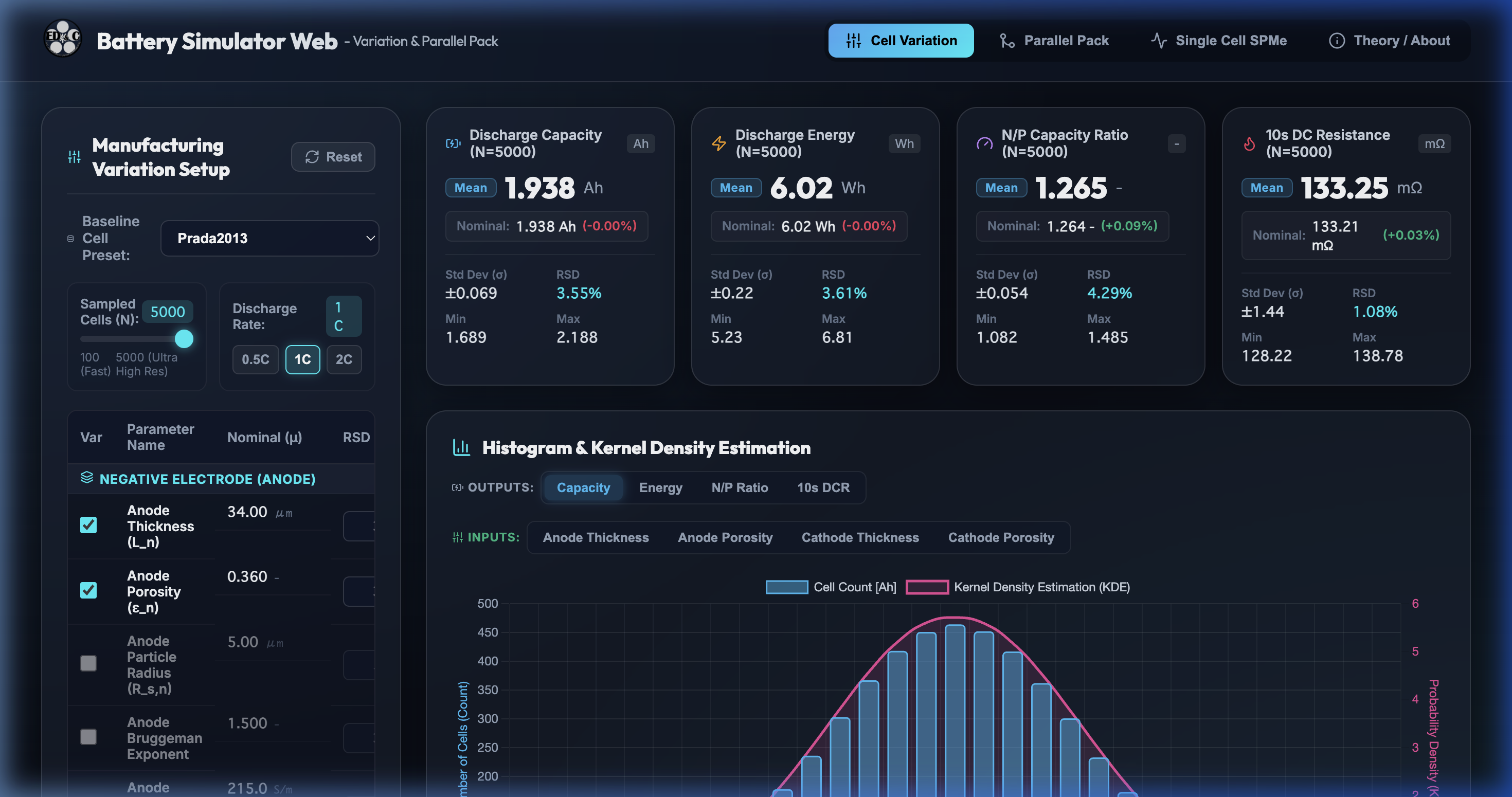 Figure 1: Cell Variation Dashboard with Parameter Tolerances (Left),
Statistical Metric Cards (Top Right), and Gaussian KDE Distribution (Bottom Right).
Figure 1: Cell Variation Dashboard with Parameter Tolerances (Left),
Statistical Metric Cards (Top Right), and Gaussian KDE Distribution (Bottom Right).
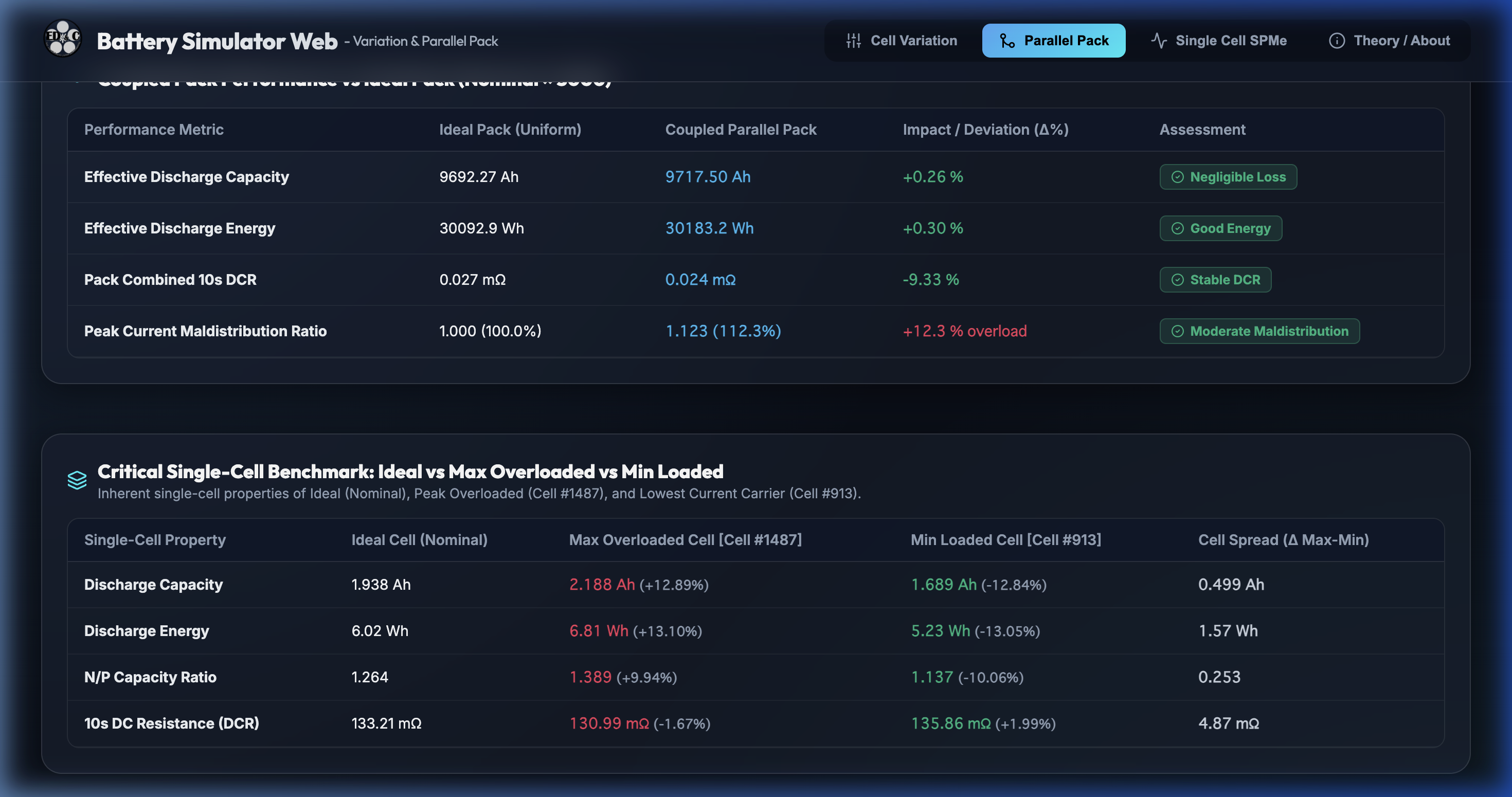 Figure 2: Parallel Pack Dynamics showing the Benchmark Table,
Performance Comparison Table, and Dynamic Current Sharing Trajectories.
Figure 2: Parallel Pack Dynamics showing the Benchmark Table,
Performance Comparison Table, and Dynamic Current Sharing Trajectories.
Unlike simplified equivalent circuit models (ECM), the SPMe explicitly solves physical conservation laws:
To simulate $N$ cells connected in parallel to a common busbar, the solver couples individual cell electrochemical states with Kirchhoff's laws at every time step:
This simulator is built using electrochemical principles inspired by the PyBaMM (Python Battery Mathematical Modelling) project and published academic literature. We express our gratitude to the battery engineering community for parameter datasets and mathematical models:
リチウムイオン二次電池のギガファクトリーにおける量産製造工程では、電極塗工膜厚、カレンダープレスによる空孔率、活物質の粒子径分布(D50)、導電助剤・バインダーの分散性(Bruggeman屈曲度指数)など、微小な製造ばらつき(公差)が必ず生じます。
単セルの公称スペックシート上では均一に見えるセルであっても、実際の製造セルには統計的な性能ばらつき(容量、エネルギー、N/P比、内部抵抗)が存在します。そして、これら多数のセルを並列接続したバッテリーモジュール・パック(1SNP)を組んだとき、キルヒホッフの法則に従い、インピーダンスの低いセルに過剰な電流が集中する「偏流(Current Maldistribution)」が発生します。
電極厚み、空孔率、粒子径、Bruggeman屈曲度、電子伝導度などがロット内で2〜5% RSDの幅でばらつきます。
輸送過電圧の非線形性や容量律速(ボトルネック)により、容量、エネルギー、N/P比、10s DCRの統計的分散が生じます。
並列接続下では内部抵抗の低いセルに電流が集中(公称値の150〜170%)。特定セルへ深刻な熱・電気過負荷がかかります。
過負荷セルが先に容量枯渇し、バスバー電圧の早期遮断を招くため、理想パック($N \times \mathrm{Nominal}$)に比べ容量・エネルギーが低下します。
本ツールは、直感的なダッシュボード形式で構成されており、複雑な電気化学計算を数クリックで実行できます。
図1:Cell Variation
画面(左:ばらつきパラメータ設定、右上:4大指標サマリーカード、右下:平滑化KDE分布チャート)
図2:Parallel Pack 画面(上:パック性能比較表、中:危険セルベンチマーク表、下:動的分流比トラジェクトリ)
Mean と設計基準値 Nominal を確認します:
簡易的な等価回路モデル(ECM)とは異なり、SPMeは電池内部の物理保存則を解きます:
$N$ 個の全セルが共通バスバーに接続された並列回路に対し、各時刻ステップでキルヒホッフの法則を連立させて解きます:
本シミュレータは、世界的なオープンソース電池モデリングプロジェクトである PyBaMM および検証済み学術論文の知見に深く支えられています。ここに深く謝意を表します: